.webp?width=205&height=50&name=LOGO_EN_LARGE%20(1).webp)
Methodology
The study involved analyzing 1,057 bike counters located across 202 regions that were actively participating in the European Mobility Week campaign, covering a total of 16 countries.
Note: The trends presented here reflect those of the cities registered for the European campaign. They are therefore not representative of all the countries studied.
Key Findings
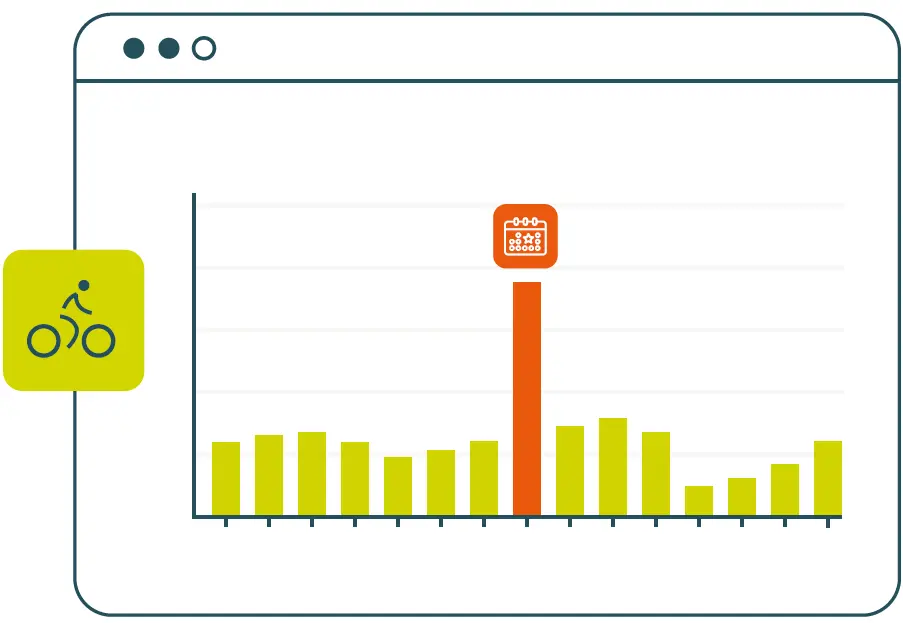
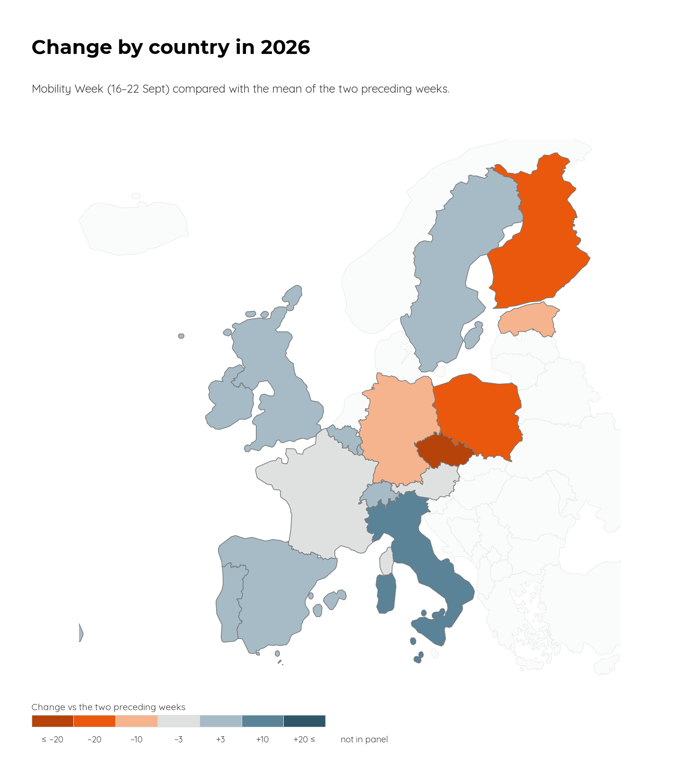
The results of the country median analysis show a 3.6% increase in bicycle use during European Mobility Week 2026 (September 16–22) compared to the average of the two preceding weeks. Nine of the sixteen countries analyzed saw an increase, led by Italy (+15.1%), followed by Belgium (+8.2%), Portugal (+7.2%), and Sweden (+7.0%).
Analysis
A contextual factor reinforces these results: the campaign week was cooler than the two reference weeks in all countries, and significantly rainier in those where the declines were most pronounced: Finland (+3.5 rainy days), Poland (+3.0), and the Czech Republic (+1.5). The comparison therefore tends to work against European Mobility Week. The positive trend observed is all the more remarkable!
It is also interesting to note here the opposing forces that seem to be at work at this time of year. Decreased daylight and lower temperatures naturally tend to reduce cycling from one week to the next, particularly in Northern European countries, which are more affected by these seasonal factors. European Mobility Week (EMW) appears to have a positive effect, slowing or even reversing this downward trend.
When aggregated by volume, the result is less positive, as the trend is down 3.3%. The discrepancy between the two figures can be explained by the weight of Germany and Poland, which account for half of the sites analyzed and are both seeing declines, while the majority of countries are recording an increase in cycling activity.