.webp?width=205&height=50&name=LOGO_EN_LARGE%20(1).webp)

Park visitation data is like gold—it helps increase budgets, guide policy, and justify adding benches, boardwalks, and bike lanes. But you’ve probably wondered: How do you count accurately? What happens when people enter from every which way? Are there multiple park visitor counting methods?
The truth is, measuring visitation has become easier and more efficient. From better sensors to improved dashboards, today’s tools make it simple to measure usage and prove impact. The one thing you shouldn’t do? Rely on estimates and assumptions. In this article, we’ll break down how to count your park’s visitors, and why reliable visitor data is the key to truly understanding your parks.
Why Count Park Visitors at All?
When you measure visitor use in parks, you’re opening the door to smarter decision-making across the board. Done right, tracking park visitation trends lets you:
-
Justify and advocate for investments and grants (and meet funder requirements).
-
"Our data shows our park got 45 % more traffic than last year, so we need this funding for improved facilities."
-
-
Inform infrastructure expansion.
-
"This segment is our most visited one. It’s the perfect place to put a new trail."
-
- Promote trail use and communicate successes to the public.
- "Our trail had over 1 million visits last year- let's break the record this year!"
.webp?width=452&height=271&name=Profil-horaire-loisir%20(3).webp)
-
Allocate resources strategically.
-
"Most visitors come between 1 p.m. and 4 p.m., so we need more staff during those hours to empty garbage bins and provide support."
-
-
Understand park usage and visitation patterns.
-
"Looks like we get a rush of visitors every day around 4pm when school ends. We should start an after-school program."
-
- Show your stakeholders that you’re data-driven—not just guessing.
- "Our data is reliable, so I know that this is where we should build the new visitor center."
If nothing else, monitoring visitor flow in your park tells you what's actually happening, not what you think is happening.
Common Methods to Count Park Visitors
Let’s look at the two main park visitor counting methods: manual counts and automated counters.
Manual Counts
A simple and straightforward method—grab a clipboard, a clicker, and start counting.
Pros: Low cost, easy to start, good for pilot projects or the short term.
Cons: Labor-intensive, doesn’t yield long-term data, prone to human error.
Useful when your budget is tight and you want a quick baseline, or to validate another data source.

Automated Counters
A tried-and-true method and our personal favorite. There are many types of visitor counting systems for parks, which we’ll cover in the next section.
Pros: 24/7 data collection, less manual labor, great scalability.
Cons: Counter cost, need to consistently check the battery and sensor, installation cost.
Automated counters give you easy-to-comprehend data. But, you need to consider installation, power sourcing, and maintenance.
%20(1).webp?width=700&height=433&name=pyro_nano_com_na-16%20(1)%20(1).webp)
Choosing the Right Technology for your Park
Leaning towards automated counters? Great! Here’s what you should know. Not all people counting sensors are the same, just like no two parks or trails are alike.
What to Look For
- Weatherproofing: can your sensor handle rain, wind, snow, or extreme temperatures?
- Battery life or power supply: how long does the battery last, and can it be solar-powered?
- Data transmission: does the counter send data automatically via cellular network, or do you have to retrieve it manually?
- Counting capabilities: can your park or trail visitor counter system distinguish between pedestrians, bikes, and other modes?

Types of Counters
- Infrared counters: invisible infrared beams detect body heat without differentiating between modes.
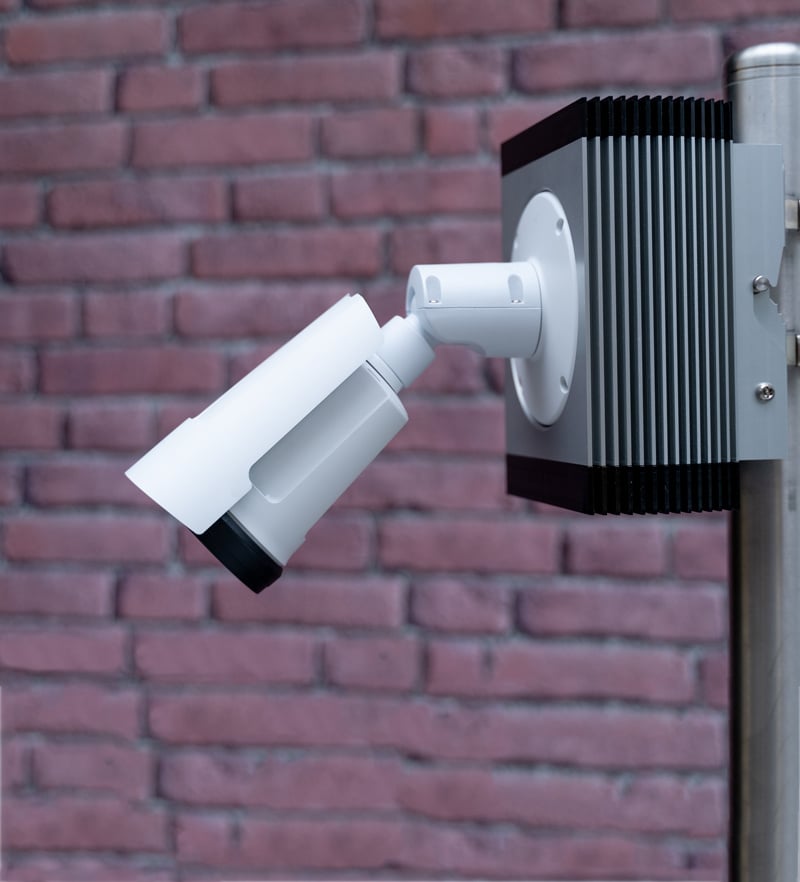
- Camera counters: processes images in real time using AI to count and differentiate between multiple modes of motorized and non-motorized users.
- Induction loops: electromagnetic loops are installed in the ground and detect the metal in bikes and scooters
- Radar counters: radio waves detect users and can differentiate between pedestrians and bicycles
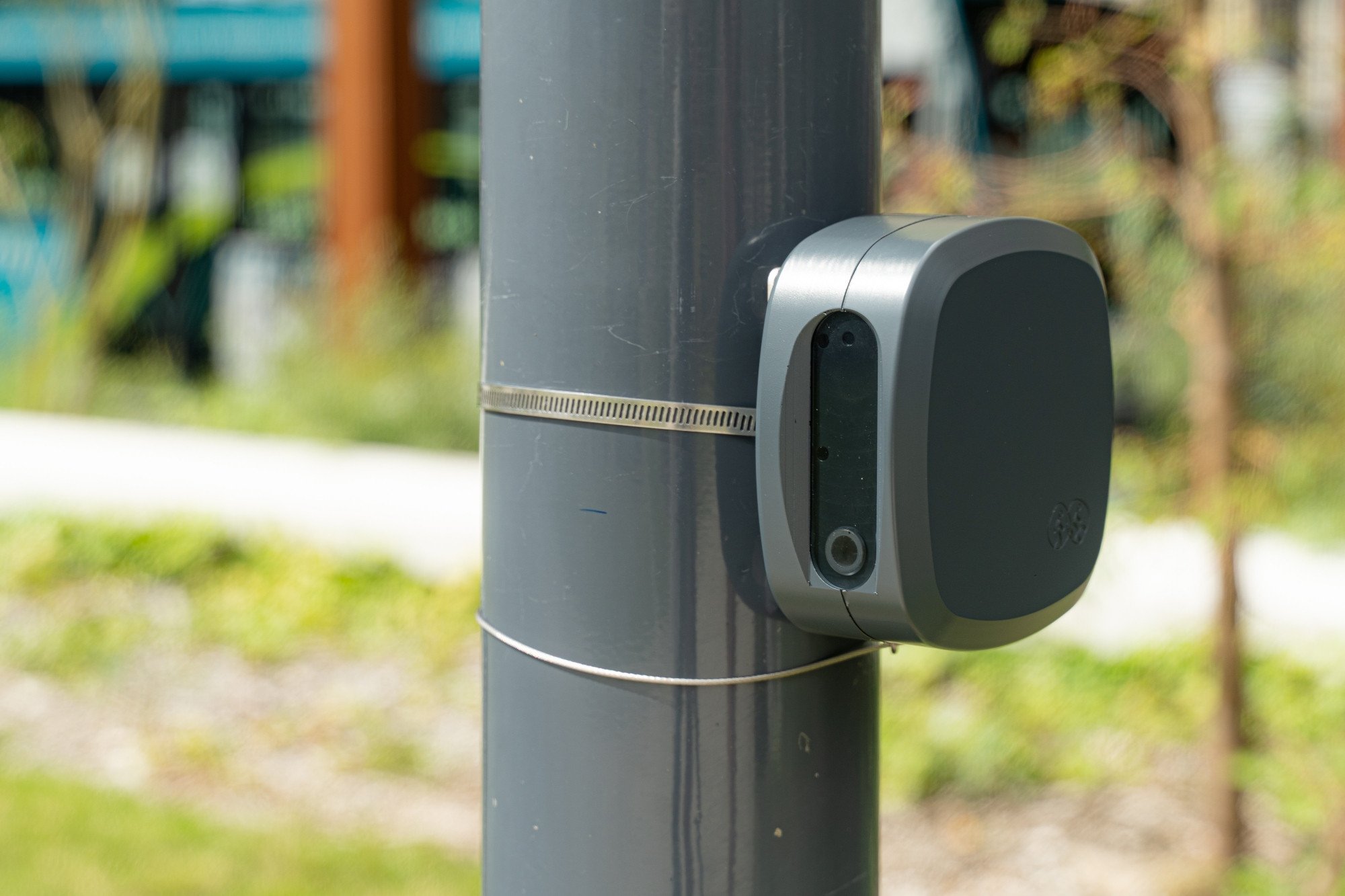
The PYRO-Box Evo infrared counter. |
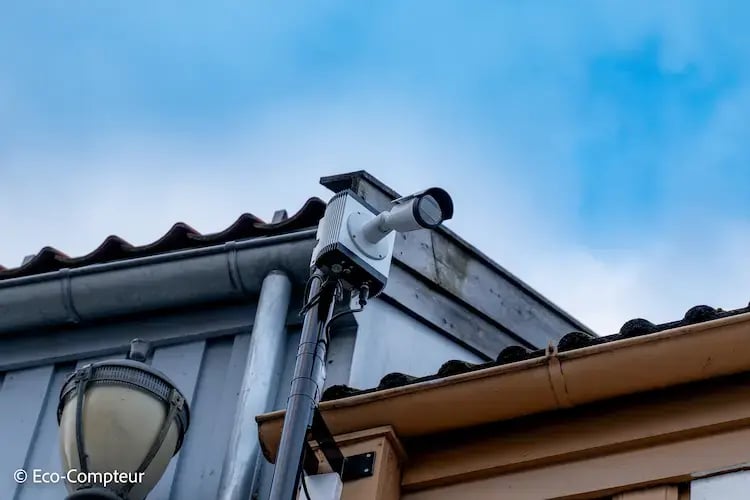
The CITIX-AI Evo camera counter. |
The ZELT Evo induction loop counter. |
.webp?width=1200&height=800&name=ZELT_EVO_URB_FR_MTL_4%20(1).webp)
Permanent Counters vs Mobile Counters
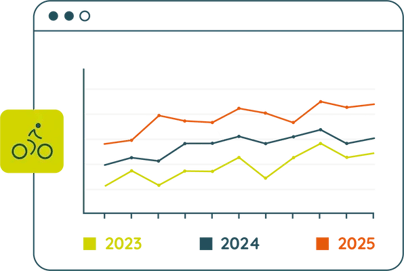
Permanent counters are meant to be installed in the same location anywhere from 6 months to multiple years. They:
- Establish long-term trends
- Create a baseline dataset
- Count non-step with minimal maintenance
Mobile counters are counters that can be moved from place to place with relative ease. They:
- Help to widen the geographic scope of your count project
- Move around your trail network, staying a minimum 2 weeks per site
- Require regular attention to install and maintain
How to Choose Counting Locations
Automated counters are amazing tools to count park visitors. But, like any great tool, they must be used correctly to be effective. For counters, a big part of this is where you choose to install them.
Things to consider when you choose locations for permanent counters:
- Where are your key access points like entrances, roads, parking lots, or adjacent trails?
- Where are your most popular segments that will yield the most data?
- Are there points of interest like visitor centers or message boards?
- Do you have sensitive conservation areas that you want to preserve?
- Are there facilities you need to monitor like playgrounds, toilets, or garbage bins?
%20(1).webp?width=700&height=525&name=Ile%20Bonfoin%20-%20belvedere%20(11)%20(1).webp)
Similarly, for mobile counters:
- Are there areas with increased seasonal visitation?
- Do you have trails with lower visitation that might still have interesting visitor trends?
- Where do you host special events like races or performances?
How Much Does a Park Visitor Counter Cost?
Now, you’re probably thinking: “What's it going to cost me?”
When it comes to an outdoor people counting system, the cost varies widely. It depends on factors like technology, counters, and the installation process. Here are parts of the cost you need to consider:
- Counters: How many do you need? Remember that you can start small and scale up later.
- Installation: Some counters require machinery or tools to be installed correctly.
- Maintenance: Batteries will need to be replaced.
- Data: Once the data is collected, you might need to pay for data analysis platforms or data services like validation and reconstruction.
In terms of price range, you can spend anywhere from a few thousand for one counter to tens of thousands for a full fleet. That said, don’t forget about the ROI: visitor count data can get you much more than its cost in grants and funding.
Case Study: Counting Visitors on Trails and Bike Paths
Let's show you some proof. We work with two trail networks in southern Kansas that installed trail visitor counters just over a year ago. With only two counters between them, they:
- Get two pedestrian/bike bridges approved: one over the US 54/100 and one over the Whitewater River
- Secured $5 million in federal and state funds for one of the bridges
- Convinced a business owner to open a restaurant just off their trail

Read the full case study here.
Time to Get Better Visitor Data?
If you’re serious about measuring park or trail use, we’re here to help. Together, we can pick the right counting solutions for your needs and get you started with a strong counting strategy. Contact us.