.webp?width=205&height=50&name=LOGO_EN_LARGE%20(1).webp)
Summary
-
The 15th Street protected bike lane in Washington, DC was built in 2021 as part of a Vision Zero initiative.
-
The bike lane is in the popular National Mall area, welcoming almost 4000 average daily users.
-
In 2026, the Federal Highway Administration (FHWA) planned to remove part of the bike lane to improve the flow of vehicle traffic for the National Cherry Blossom Festival and America’s 250th anniversary.
-
The Washington Area Bicyclist Association convinced a judge to put the project on hold, using data from a report that showed a 91% reduction in bicycle injury crashes and improved travel times on the corridor.
Intro
When it comes to public infrastructure decisions, opinions are often varied and widespread. But in Washington, DC, a decision to keep the 15th Street NW protected bike lane showed a powerful fact: data can cut through the noise!
In March 2026, the Federal Highway Administration (FHWA) planned to remove parts of the popular protected bike lane. But, these plans were paused after a local cycling association took the decision to court and a federal judge ruled that the decision needed further review. For cities pursuing Vision Zero, this is a great example of how data is essential to prove impact and protect what works.
Why the bike lane was created
The 15th Street Bicycle Safety Improvement Project was proposed in 2021. The goal was to create a two-way protected bicycle facility from Pennsylvania Avenue NW to Maine Avenue SW, connecting to a complimentary project along East Basin Drive.
The new cycletrack would improve bicycle access and safety in the National Mall area, a key recreational and touristic hotspot. This proposal was part of the city’s larger Vision Zero strategy that year. Importantly, the proposal included the intersection of 15th St. and Constitution Ave. NW, a previously identified high crash intersection.
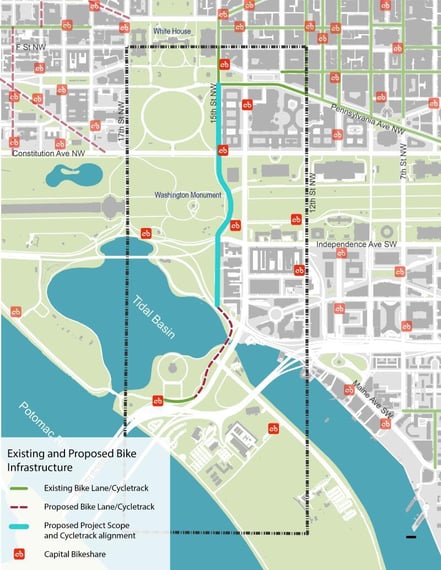 The 15th Street Bicycle Safety Improvement Project outline from 2021.
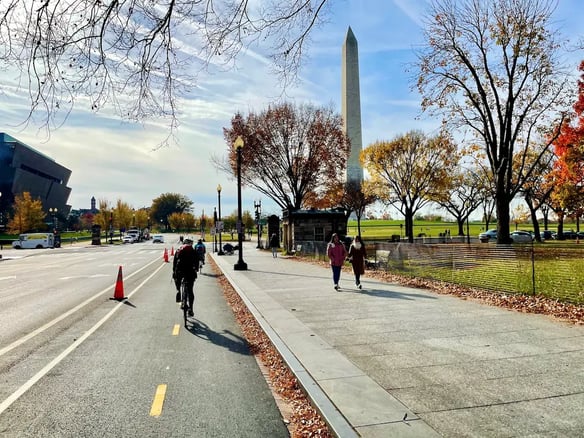 Early image of the 15th Street NW bike lane in 2021. Credit: airbus777, CC BY 2.0
Why the bike lane was at risk
After being installed in the fall of 2021, a portion of the 15th Street bike lanes faced removal in March 2026 by the Federal Highway Administration (FHWA). Their reasoning was that eliminating the bike lanes would improve the flow of traffic for the hundreds of thousands of tourists expected to visit D.C. this year for the National Cherry Blossom Festival and America’s 250th anniversary.
How the removal project was paused
Before the removal project could start, the Washington Area Bicyclist Association took the U.S. Department of the Interior to court in an effort to reverse the decision.
The outcome? The judge ruled for the removal to be paused and reviewed further, because the federal government did not provide “sufficient consideration to available safety and traffic data” in their decision to remove the bike lanes.
The Real Bike Counts Behind the 15th Street Bike Lane
The key data points provided by the Washington Area Bicyclist Association came from a 2026 District Department of Transportation (DDOT) report. Here’s what the report found:
Safety Results
According to DDOT’s analysis, in the months after the bike lane was installed, they found a:
- 91% reduction in bicycle injury crashes
- 46% reduction in roadway crashes along the corridor
Traffic Flow Results
The DDOT report stated that the 15th Street bikes lanes helped improved the flow of traffic:
- Speeds increased by 17 percent
- Peak northbound travel time decreased by 36 seconds on the corridor
- Peak southbound travel time decreased by 40 seconds on the corridor
- Vehicle speeds became more consistent
Cycling Usage Results
DDOT also reported:
- Nearly 4,000 daily bike users on the bike lane
Importantly, Mayor Muriel E. Bowser of Washington, DC made a statement about the effect of removing the bike lane for such a high volume of users:
“[Removing the bike lane] would push cyclists into traffic or onto crowded sidewalks, creating new safety risks for everyone.”
She also added that:
“Keeping the bike lane in place helps manage high volumes safely and ensures a better experience for all who are visiting the District.”
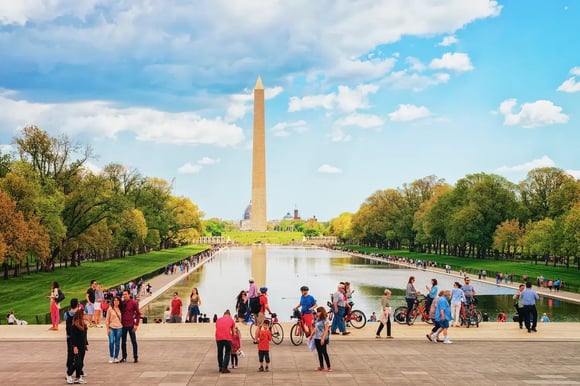 Washington monument and pool in the National Mall in Washington, D.C.
Why This Matters for Vision Zero
Vision Zero aims to eliminate traffic deaths and serious injuries through safer street design and evidence-based decisions.
The 15th Street case demonstrates that:
Infrastructure Benefits Can Be Measured Quantitatively
Once the 15th Street Bike Lane was built, it’s effects were both felt and—most importantly— measured.
Reductions in bicycle injury crashes, decrease in travel times, and volume of bikes per day: none of these figures were estimated. All of them were given a concrete value. It was this quantitative measurement that gave the 15th Street Bike Lane a much better chance at being kept.
Bike Count Data Builds Credibility and Protects Existing Investments
Collecting data may seem like an investment, but the returns over time can end up being priceless.
Reliable data, like the count data or the safety data collected by DDOT, are huge factors when justifying new infrastructure or defending successful ones.
As more data is collected over time, the insights become increasingly credible and hard to ignore when making policy decisions. For the 15th Street Bike Lane, their decision to start collecting data five years ago was the difference between keeping the bike lane or having it removed.
What a Bike Counter Can Reveal Beyond Volume
In the case of the 15th Street Bike lane, their bike counters revealed key insights about the number of people using the bike lane per day. A modern bike counter (or a multimodal counter) can do even more to help cities understand their network, revealing information like:
- Daily and hourly ridership patterns
- Weather sensitivity
- Year-over-year growth
- Weekend leisure vs weekday commuting
- Before/after infrastructure impact
- Popular and underserviced corridors
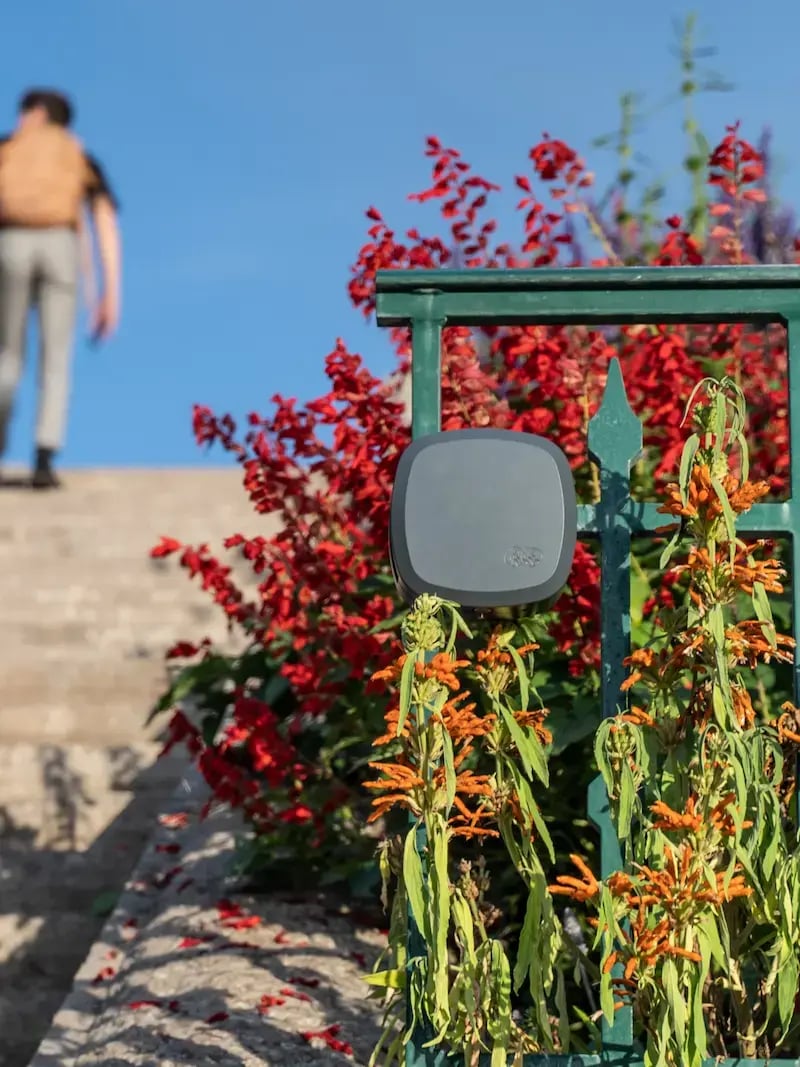
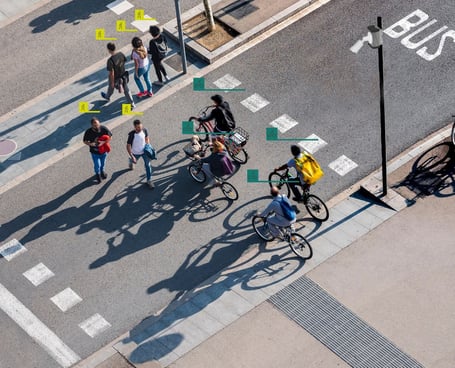 Example of the CITIX-AI multimodal counter.
Final Takeaway
Washington DC’s 15th Street NW bike lane shows that, to build safer streets, you need to think ahead about which data to track to provide measurable proof of improvement.
For Vision Zero cities, data collection tools like a bike counter can become one of the most valuable tools in your toolkit.