Key takeaways
- Travel patterns: more trail users travel eastbound, with a morning spike observed generally and an afternoon recreational bump.
- User mix: pedestrians and cyclists are almost evenly split, with more people on foot than expected.
- Seasonality: cycling events in July and October create clear peaks.
- Visitor numbers: more than 102,000 counts at a single location near Mount Vernon in a year.
- Decisions supported: maintenance funding requests, grant applications, tourism promotion, local business development and a 2027 tax levy campaign.
Introduction
Knox County sits close to the geographic center of Ohio. Its Park District has a broad mission: acquire, conserve and manage the county's natural resources, preserve its rural character and historical sites, maintain green space and provide public access to parks and natural areas.
Part of that mission is a network of 35 miles of paved multi-use trails crossing the county from west to east, linking villages, river access points and parks. For a small Park District, keeping that much asphalt in good condition is a constant challenge. Visitor data has become a key part of the case for funding it.

Counting trail users: the challenges
The Park District's situation is unusual. It manages the trails without owning them, and the county network is split into three trails, each with its own volunteer board and fundraising mechanisms:
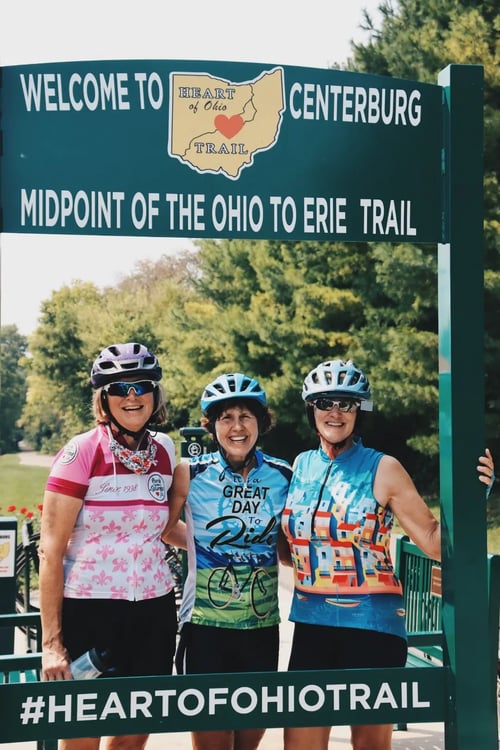
- Heart of Ohio Trail, in the west of the county
- Kokosing Gap Trail, in the middle of the county, built and maintained from the start by a volunteer board that predates the Park District
- Mohican Valley Trail, running east into the neighboring county
Three volunteer boards, county commissioners owning the property, , and a small team overseeing administration, stretched across multi-use trails and parks: decisions involve many partners, and each of them needs convincing.
Maintenance is the biggest need. Repaving is costly, and the Park District relies on grants and local taxes to pay for it. To write strong grant applications and help county commissioners advocate for the trails, the team needed numbers to back up what everyone could guess on the ground: these trails are well used.
Solutions
The first step was a single MULTI counter, installed in the middle of the county, which counts pedestrians and cyclists separately and records their direction of travel. Its results showed how useful the data could be, and the Park District secured state funding to install 11 more counters.
For this second phase, the team chose PYRO Evo counters, a non-intrusive solution that counts trail users with an infrared sensor installed beside the trail, with no work on the trail surface.
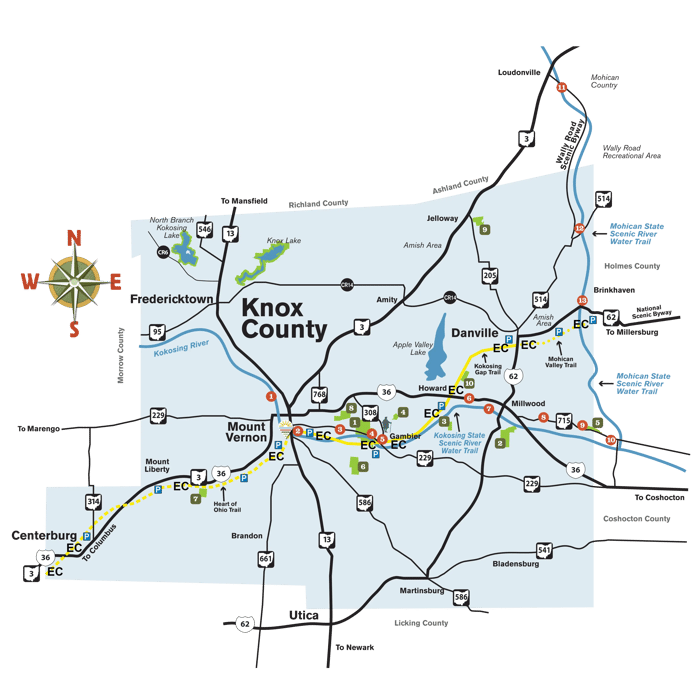
Counter locations follow the logic of the network:
- County lines, on the west and east sides, to measure movement in and out of Knox County
- Both sides of each village the trails cross, such as Gambier and Howard, plus counters near Mount Vernon and Centerburg
- Main entry and access points along the trails
Because the villages are spread out along the route, this layout captures how people move across the whole county.
Outcomes
Key insights: what did the counters reveal about trail users?
The data confirmed what the team expected and put clear figures on it.
- More than 102,000 counts were recorded at the Mount Vernon counter from November of 2025 to November of 2026.
- More trail users travel eastbound than westbound, with the access points around Mount Vernon, Gambier and Howard seeing the most movement.
- A daily pattern shows a morning spike, steady use through the day and an afternoon bump, typical of recreational use.
- Pedestrians are almost as numerous as cyclists. At the midpoint of the Heart of Ohio Trail, the split is close to 50/50, with more people on foot than the team expected.
- Cycling events in July and October create clear seasonal spikes.
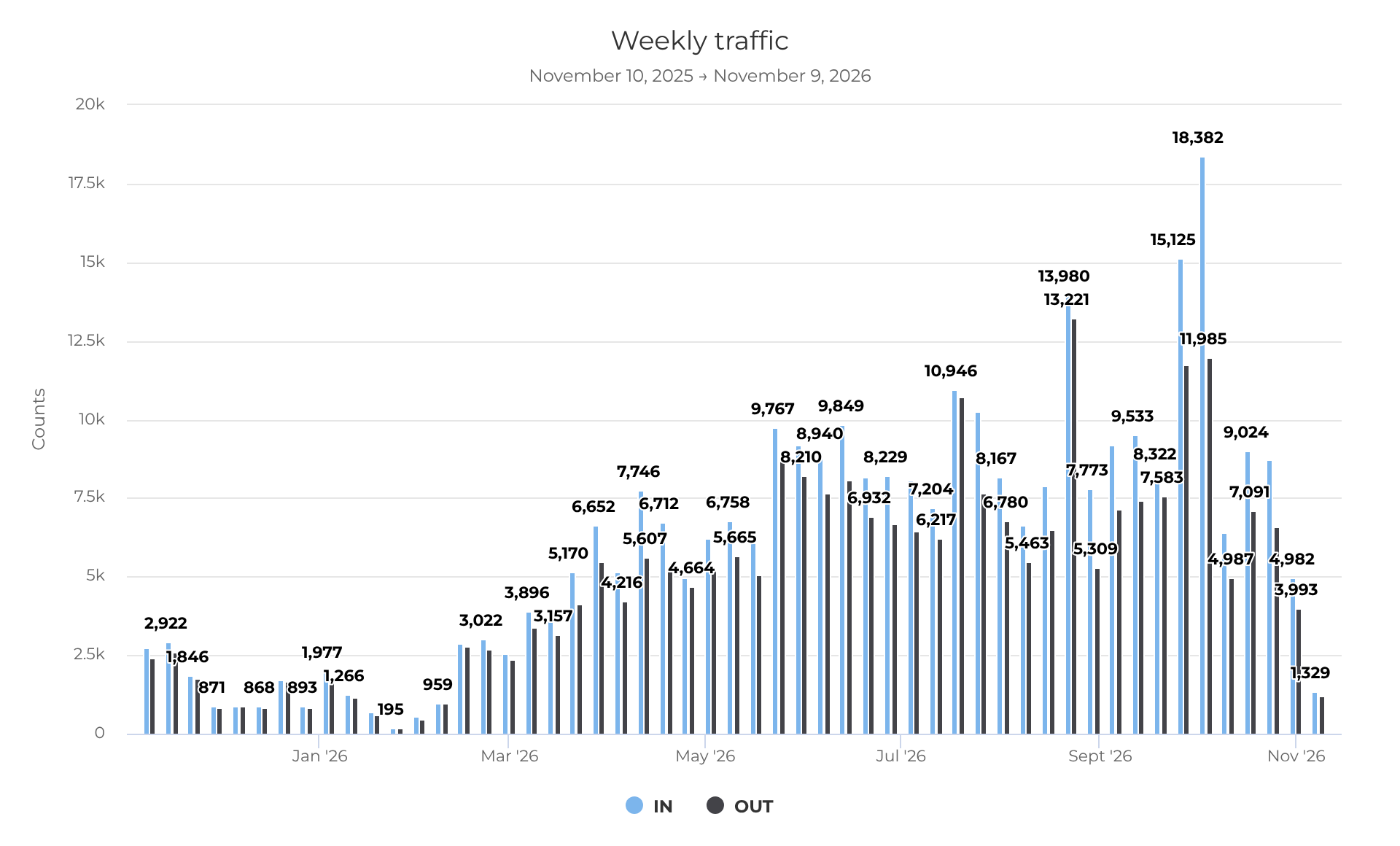
Weekly traffic, showing the trend throughout the year with peak activity in October & July due to cycling events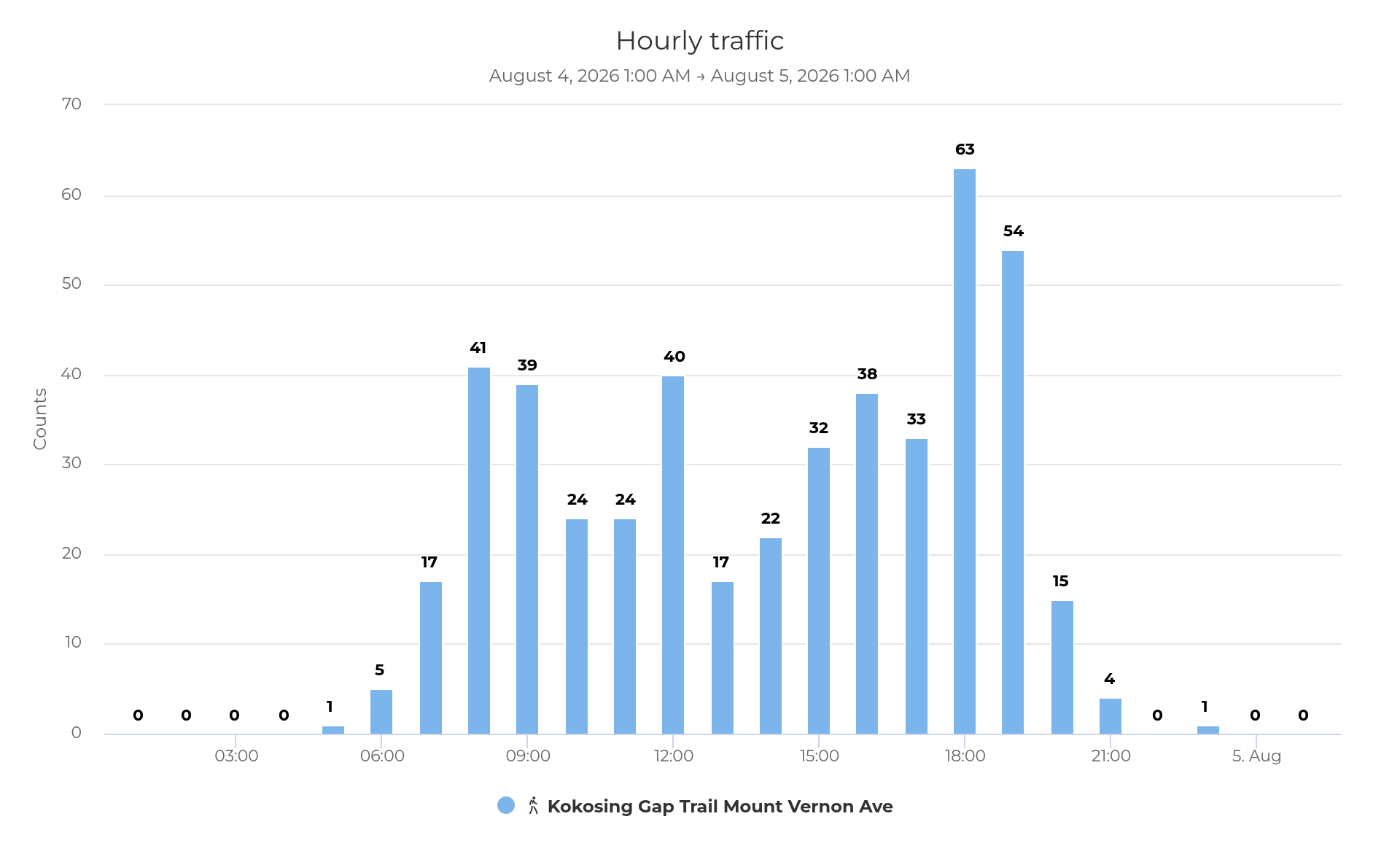
Impact: how does the Park District use trail counting data?
Count data is used to support many different operations. It is first supporting maintenance with the county commissioners. The Heart of Ohio Trail board shares its counts with the county commissioners through the Park District to support maintenance funding. The Heart of Ohio Trail board has also used the data in the context of a small business loan for a new restaurant along the trail, and shares it with other potential business owners looking at opportunities near the trail. The Convention and Visitors Bureau uses trail counts to decide where to advertise Knox County as a touristic destination.
Last but not least, grant applications. The Park District has applied for two grants using the data, both focused on trail development.
What comes next: a tax levy campaign backed by ped/bike data
As a park district, Knox County Park District is a subdivision of the state, separate from county government. It relies on property and real estate taxes, and every five years it goes back to voters to renew its funding.
The next campaign is planned for 2027. The data coming from counting trail users will be at the heart of it, to show residents how much the trails and parks are used, and what their contribution pays for. The aim is to keep the Park District running at its current level of service, and possibly to ask for a modest increase in funding.
Meanwhile, the team is completing the network with the last counters at the West county line.
Learnings
"Trail counts give us the numbers to show our residents and partners how much these trails are used, and why they are worth maintaining." David Heithaus, Director, Knox County Park District
Start small, then scale with evidence. One counter in a central location was enough to prove the value of the data and secure state funding for 11 more.
Place counters to tell the whole story. Counting trail users at county lines and on both sides of each village shows how people move across a territory, beyond a single point of the trail.
Share data widely. On a network managed by several boards, data is most useful when it reaches the people who make decisions: county commissioners, tourism bureaus, local businesses and voters.