.webp?width=205&height=50&name=LOGO_EN_LARGE%20(1).webp)
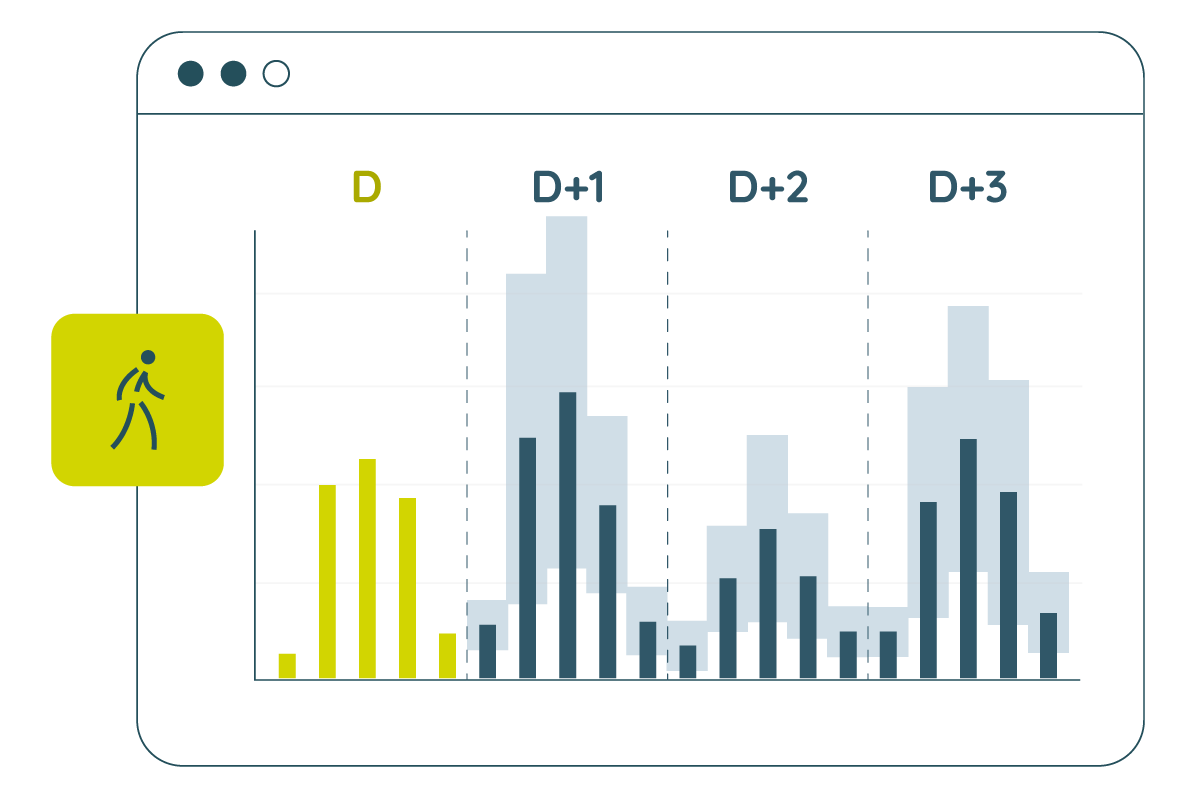
In a nutshell: Eco-Visio now offers hourly visitor forecasts over 4 rolling days, enriched by weather, local calendar and seasonality, based on your site's actual history (up to 1 year of hourly history).
The challenge: use data to improve visitor experience
For tourism teams (offices, destinations, local authorities), the challenge is not just to "measure" visitor traffic numbers, but to coordinate:
- welcoming and informing visitors,
- local stakeholders (tourism professionals, service providers, transport, security),
- technical services and facilities management (sanitary facilities, waste disposal, signage),
- and environmental protection (sensitive areas, trails, dunes, cliffs, riverbanks, etc.).
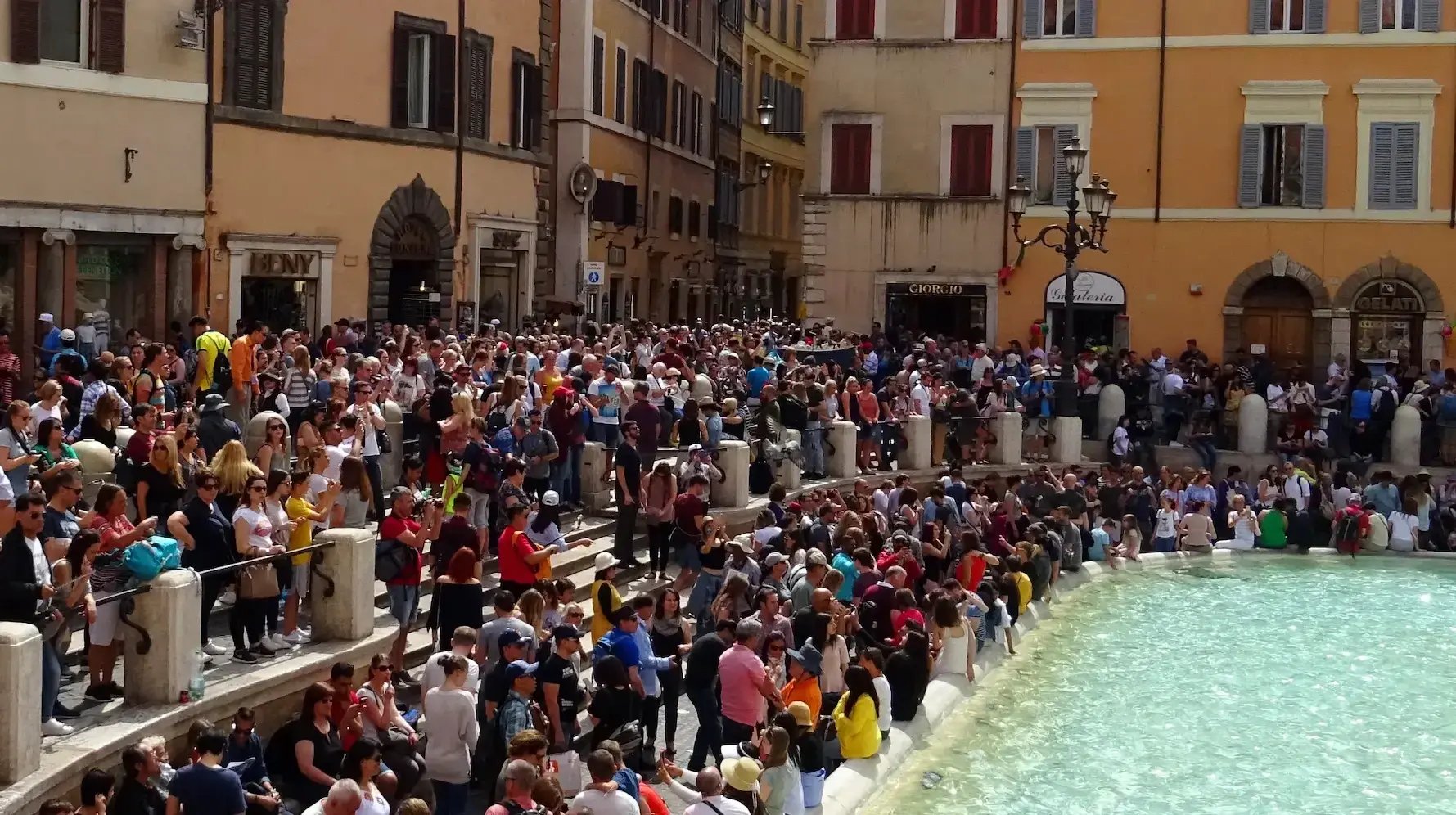
Without reliable forecasts, managers sometimes communicate too late and the consequences are well known:
- saturation of access points and parking lots
- degradation of the visitor experience,
- tension with residents and economic players,
- weakening of natural areas,
- and a risk to the destination's image.
A solution: Eco-Visio Prediction, a 4-day forecast of visitor traffic numbers
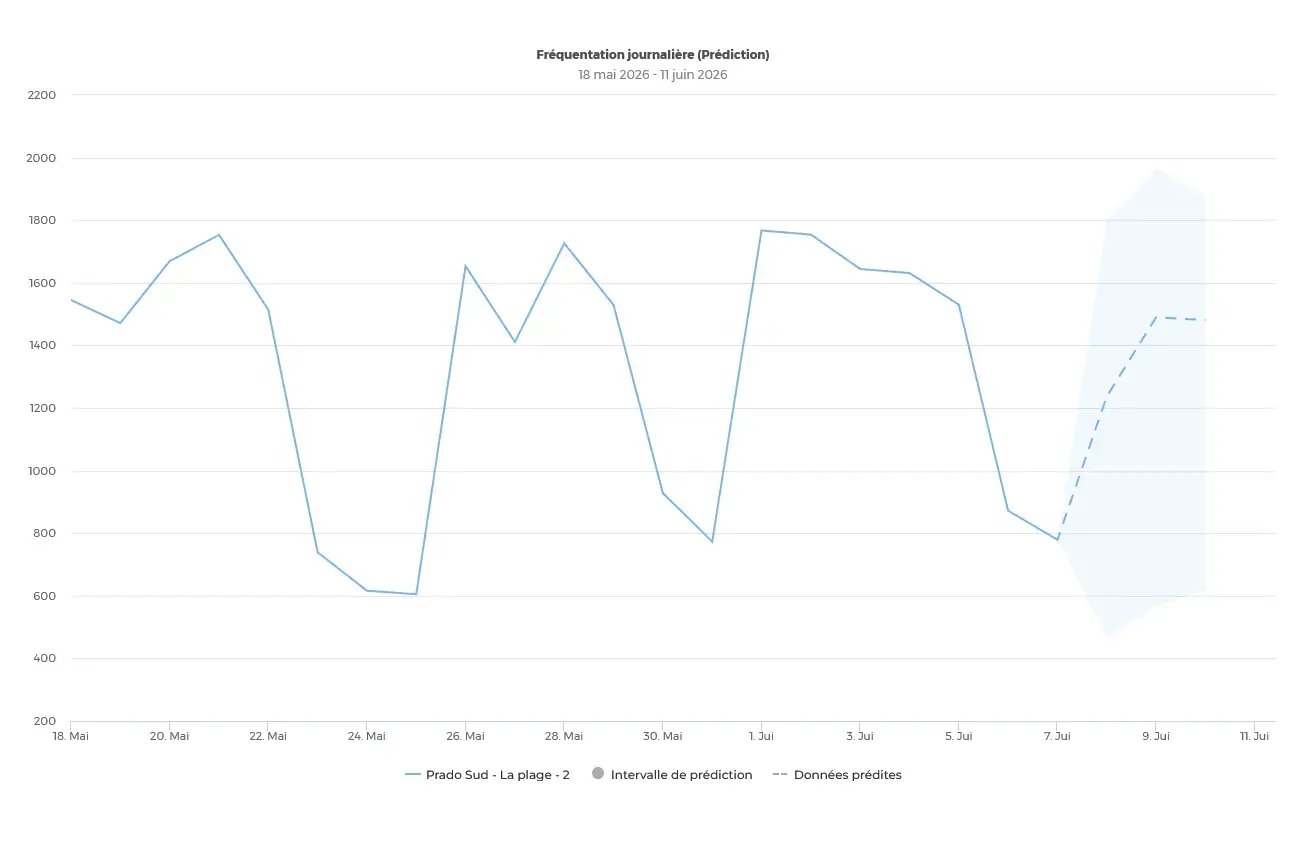
The Prediction feature integrated in Eco-Visio provides a forecast for each counting site (as part of the EXPERT offer):
- an hourly curve over 4 sliding days,
- a central value and low/high limits (confidence intervals),
- native integration of weather (temperature, precipitation) and calendar (public holidays, key periods),
- all anchored in the local history of each site (up to 1 year of hourly history).
What prediction means for tourism managers and managers of urban and natural public spaces
1) Prepare the season (and sensitive weekends) with concrete guidance
Tourist periods often come down to a few details: a weather report, a bridge, a market, a race, a festival...
With 4 days' visibility, you can :
- prepare visitor traffic and parking arrangements,
- trigger waste management reinforcements,
- adjust reception staff (agents, mediation, information),
2) Communicate before saturation (with visitors... and professionals)
Prediction is not just an internal tool: it enables you to communicate earlier and more clearly.
Depending on your strategy, predictive visitor numbers can be relayed :
- on your website / "practical info" page,
- via social networks and newsletters,
- via an information panel,
Objective: provide guidance before the site exceeds its capacity. It's a concrete lever for more sustainable tourism: distribute flows, protect sensitive areas and preserve visitor quality.
(For more details on this point, see how the managers of the Tabular Mountains park in Poland have managed to better distribute visitor numbers over time and space on this natural tourist site).
3) Better coordination of local players
For a destination, anticipation is a governance tool:
- inform service providers (shuttles, rental companies, guides),
- notify security/rescue services,
- synchronize field teams between several sites (beaches, trails, ports, park-and-ride facilities).
Useful in urban environments too
We also know that peak periods don't just affect natural sites. In cities, too, crowds can be concentrated around particular events (heatwaves, public holidays, etc.): riverbanks, parks, historic centers, cycling routes, events.
Prediction enables us to anticipate :
- periods of high use of public spaces,
- adjustment of resources (agents, equipment, cleaning),
- and communication about alternative routes or slots.
The "ingredients" of Eco-Visio prediction
| What you get | Why it's useful |
|---|---|
| 4-day time forecasts | Plan reception, teams and operational arrangements |
| Low/high limits + central value | Decide with transparency on the reliability of the prediction |
| Model trained on your local history | Forecasts adapted to your site's actual behavior |
| Automated updating | Updated forecasts with no additional operational burden |
Would you like to know more?
Contact us to find out more about the robust scientific methodology behind this visitor traffic prediction feature, or request a feature demo!