.webp?width=205&height=50&name=LOGO_EN_LARGE%20(1).webp)
.webp)
For many years, bike counting has increased throughout North America. The aim of these counts is to provide reliable indicators of people's biking behaviors in communities, cities, states, provinces, or even at the national level. This data is multifaceted and allows organizations to:
-
-
Compare ridership before and after infrastructure construction, showing the tangible results of a project.
-
Monitor the development of active transportation and changes in cycling modal share over time.
-
Create tools for studies on the economic impact of cycling infrastructure at regional and international levels.
-
Justify investments in safe cycling facilities that are innovative and visible to all users.
-
Counting bicycles in the city: how and why?
When you count bikes in cities, you get a reliable and realistic view of bike flows. This data can be used to prioritize resources, justify investments, and meet your program objectives.
To increase the modal share of cycling, many cities are investing in building and improving cycling infrastructure. Bike count data quantifies the results of the work carried out. Monitoring the use of cycles paths and other infrastructure provides objective data and cycling statistics that reflect the ground truth, or the reality at the ground level.
Behind the objective of increasing bikes on the roads is the goal of improving the quality of life in the city. Cycling promotes physical activity, takes up less space, creates less noise, and pollutes much less than motorized vehicles. All of this combined helps make cities more pleasant and livable.
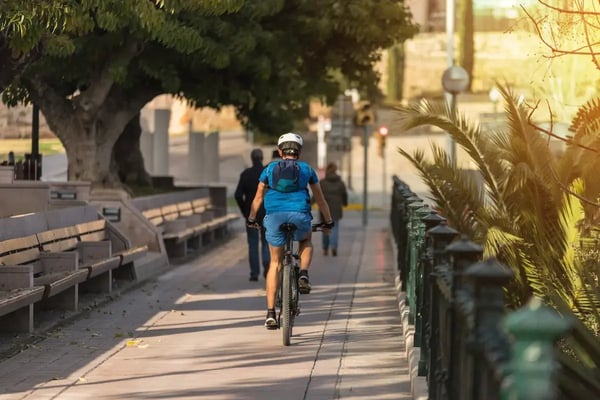
Here are the benefits of cycling in the city in more detail:
-
-
Smoother traffic flow: with cycling on the increase, vehicle traffic is often less congested. This allows a greater volume of users to circulate more quickly.
-
Shorter journey times: for short journeys, cycling is often the fastest mode of transport.
-
Less pollution: if more bikes are on the road, the number of individual motorized vehicles is reduced, reducing carbon emissions linked to motorized traffic.
-
Better for public health: as cycling for everyday commutes is a moderate physical activity, it helps maintain cardiovascular health for the general public.
-
To get a realistic idea of the volume of cyclists, there are a number of different methods to count bikes. Depending on your location, the size of your city, and your objectives, you will use different tools and key indicators.
In most departments of transportation (DOTs), user types, volumes, and speed are the key criteria used to track traffic flows. These indicators make it possible monitor traffic flows, improve infrastructure safety, and establish typical profiles.
What about tools? With our ZELT Evo counter, you can count bikes and scooter to get precise indicators on how people use your infrastructures. Use count data to prioritize areas for improvement or define daily trends, and use speed data to identify potential usage conflicts. You can also consider the Eco-DISPLAY Classic+, a large-scale count display for communicating with the cyclist community directly on the street. As you count bikes, the display will tally up total counts, sharing the data with your entire community.

Counting cyclists on greenways: measuring economic impact and justifying investments
A greenway is a key facility for non-motorized travel. Bikes, pedestrians, scooters, e-bikes, and rollerbladers all benefit from them . These facilities are a symbol of slow tourism or sustainable tourism.
Cycle tourism also brings economic benefits to the region. Cycling tourists have to find accommodation and food during their journey. This is where bicycle count data can provide valuable information. They allow us to compare seasons and validate the impact of events or new developments.
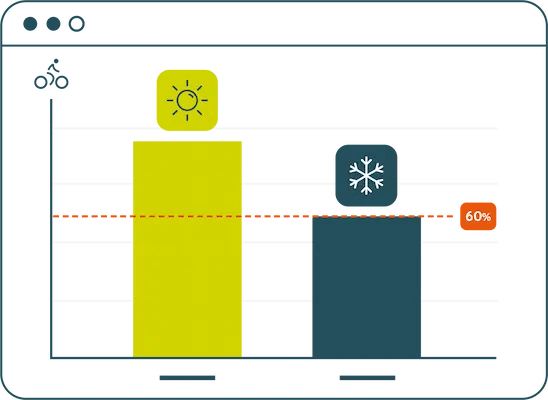
Find out about the economic impact of tourism on your region using data from bike counts on greenways.
While greenways are often associated with tourism, they are also used by local cyclists for their safety. Tracking traffic flows and establishing long-term user profiles helps to frame investments in infrastructure development and safety. As this infrastructure is used by both pedestrians and cyclists, it is interesting to obtain volume indicators for both modes and to establish hourly profiles. With our MULTI Evo multi-user counter, you can obtain numerous indicators and justify your infrastructure investments.
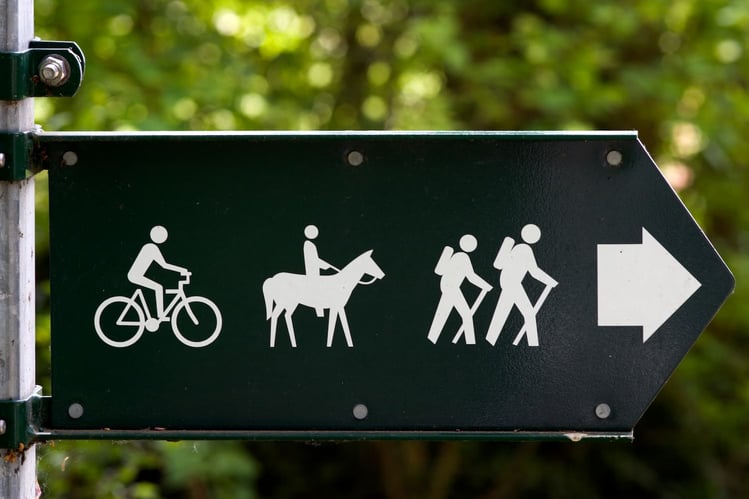
Counting bicycles in natural environments: preserving flora and fauna, measuring impact
In natural areas, mountain bikers enjoy natural trails and landscapes. Counting mountain bikers allows you to monitor traffic flows and assess their impact.
With a bike counter for natural environments, all mountain bikers will be counted. With the help of the ridership data obtained, you can define seasonality, assess the impact of the weather, and identify long-term trends.
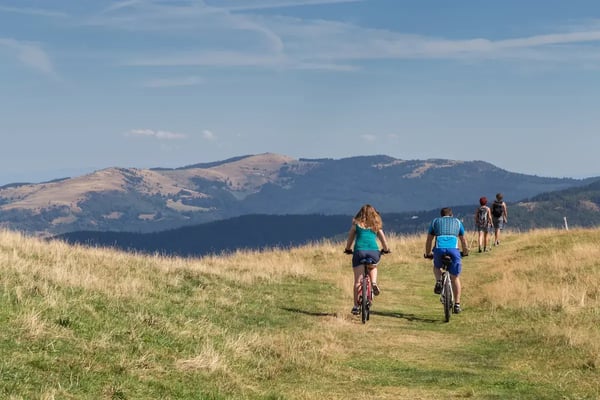
If the counting zone is large, it is possible to define strategic locations for counting mountain bikers. Then, using mobile counters, our experts can carry out a study to determine the total number of visitors in large areas.

Track the speed of cyclists with our bike counter for natural environments. With the help of our counting data analysis platform, you'll have the tools you need to prioritize investments, communicate with the public, and make trails safer.
Last but not least, data from bike counts in a natural environment will enable you to assess the impact on flora and fauna and define thresholds for visitor volumes to avoid overtourism.
How do you count bikes?
Field counts, a reliable data source
When it comes to counting bikes, there are several ways of collecting data. The simplest and quickest is to have someone manually count all the bikes on a given day. This method is easy to set up and represents a low investment. On the other hand, the margin of error is quite high, and when the person stops counting, there's no data left.
With an automatic bike counter, counts are taken every day, at all times and in all weather conditions. Data collection reflects the reality on the ground, enabling the right decisions to be made.
Mobile or floating data
Floating or mobile data is data collected by mobile operators. They provide information on the volume of cyclists, sometimes their speed and route, and give an idea of how these flows are evolving. Their only drawback depends on the cyclist's use of a smartphone. Without a smartphone, there's no data.
How do you analyze bicycle count data?
You can obtain a range of information from count data. You can identify the peak hours of use, the busiest days, the busiest seasons, and finally be able to compare different years.
Visualize weekday cycling volumes
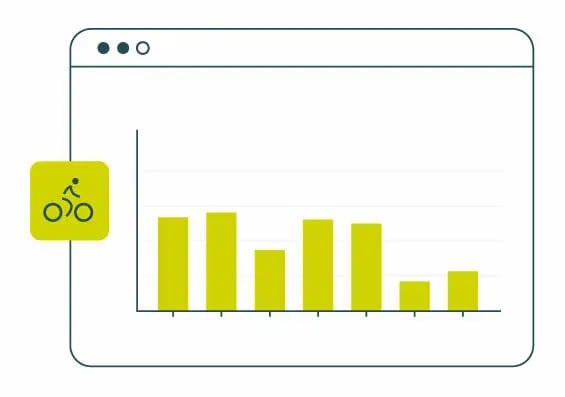
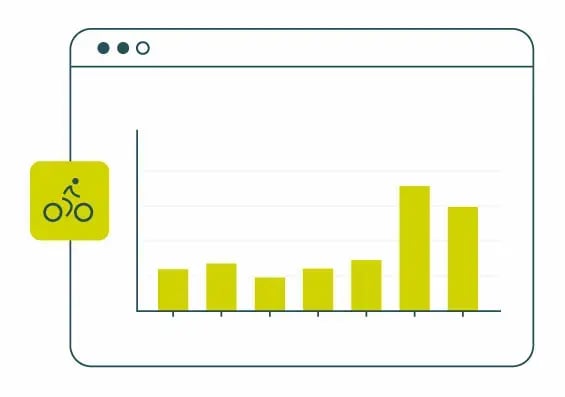
You can easily identify the busiest days of the week by looking at daily cycling volumes. This information also gives you an idea of the way people use your infrastructure. A bike path that's busier on weekdays than on weekends is a sign of commuter traffic. Conversely, a bike path that explodes in popularity on weekends is most likely used as a leisure path.
 |
 |
With this information, you can easily adapt your infrastructure to users' needs and expectations.
Track long-term trends
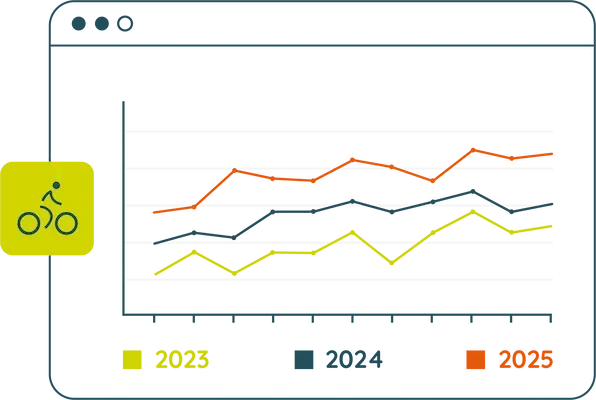
With cycle counts over several years, you can compare your volumes annually and visualize the success of your cycling plan.
Share this data with the public and your partners easily from Eco-Visio.
Measure the impact of an event
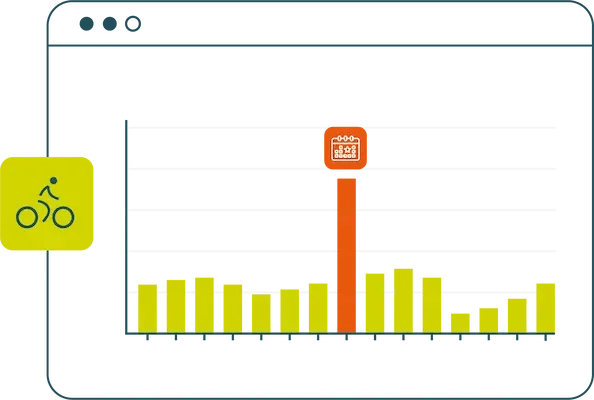
Bike count data allows you to see the success of an event. Whether you're organizing a bike race, closing a street to cars, or any other event in favor of active mobility. Measure traffic flows and use events to develop your cycling community by promoting and communicating with users.
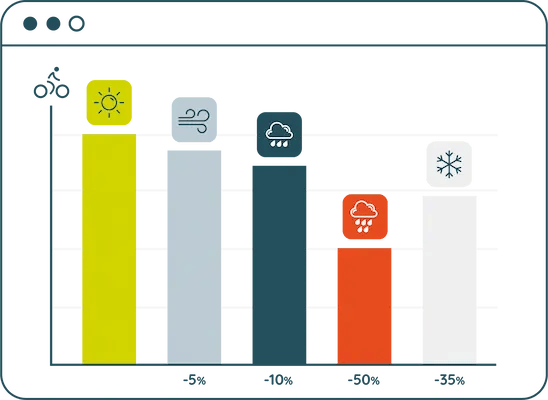
Understand the impact of weather
When we think of cycling flows, we always imagine large numbers of cyclists when the weather's good. But what exactly is the impact of the weather on the number of cyclists? Using your bicycle counts and cross-referencing them with weather data, refine your analysis to better understand flows in different weather conditions.
In conclusion, why count bikes?
Understanding the flows and movements of users in an area is important when planning bike lane development or improving factors such as safety or accessibility. This knowledge enables you to make the right decisions, and thus make your community more bike-friendly. For over 25 years, Eco-Counter's experts have been working with all types organizations is urban and natural areas worldwide. We'll be happy to discuss your cycling objectives and help you achieve them!